Safety comes before optimization
A voyage is only optimized if it is safe.
That sounds obvious, but it is an important distinction in voyage optimization. The objective is not to calculate the lowest-cost or shortest route first and then check whether it is acceptable afterwards.
Safety has to define the boundaries of the optimization from the beginning.
At Optimum Voyage, the optimization works within the operational and weather limits defined for the vessel and voyage. The system searches for the best commercial outcome inside those limits, not outside them.
The optimization is constrained before it starts
Every voyage operates within a set of restrictions.
Some are navigational. Others relate to the vessel, the weather, the engine, the cargo or specific operational instructions.
These constraints are not separate from the optimization problem. They are part of it.
If a vessel is not permitted to encounter conditions above a defined limit, an otherwise attractive route through those conditions is not considered a valid solution.
This matters because the mathematical shortest route, the lowest-fuel route or the fastest route is not necessarily a route the vessel should sail.
The best voyage is the best voyage available within the safe operating envelope.
Not every weather limit means the same thing
A simple approach to weather routing is to define a maximum weather condition that the vessel should not exceed.
For many voyages, that is entirely appropriate.
But operations can sometimes require more nuance.
There can be a difference between conditions the vessel would preferably avoid and conditions that represent an absolute operating limit.
For example, an operator may want the vessel to remain below a preferred wave condition wherever reasonably possible, while recognizing that short periods of more demanding conditions may occasionally be unavoidable.
This creates an important distinction between a preferred operating range and a hard limit.
An optimization can then work to remain inside the preferred range while still understanding the vessel's absolute boundaries.
The hard safety limit remains exactly that: a limit.
Direction matters
Weather also does not affect a vessel equally from every direction.
The operational impact of a sea from ahead can be very different from the same sea experienced from astern or on the beam.
The same principle applies to wind.
For more advanced voyage setups, safety constraints can therefore account for the relative direction of weather rather than treating every wave or wind condition as identical.
This reflects something Masters and experienced operators already know well: a vessel's ability to operate safely and comfortably depends not only on the size of the weather, but also on how the vessel encounters it.
The purpose is not to push closer to a limit.
It is to represent the vessel's real operating envelope more accurately.
Safety and commercial optimization are connected
Safety is sometimes presented as being in conflict with commercial optimization.
In practice, good optimization should bring the two together.
Avoiding severe weather can reduce resistance, limit unnecessary speed loss and lower fuel consumption.
An early adjustment can also be commercially better than waiting until the vessel is close to a developing weather system and then making a large deviation.
This is one reason why the remaining voyage is re-optimized regularly.
Weather forecasts change. The vessel moves. Conditions that looked relevant several days ago may develop differently.
By continuously reassessing the voyage using the latest information, the route can be adjusted while there is still time and distance available to do so efficiently.
The earlier a developing constraint is understood, the more options remain available.
Navigational integrity still comes first
Weather is only one part of a safe voyage.
The optimization must also respect the navigational structure of the route.
A voyage begins from a navigable baseline route. In areas where the vessel has limited navigational freedom, the relevant route requirements remain fixed.
Optimization freedom is used where it makes operational sense, particularly in open water, while water depth and other navigational constraints remain part of the calculation.
This means optimization is not simply a mathematical exercise that moves waypoints wherever it finds an advantage.
It has to remain a route that can actually be sailed.
The Master remains in command
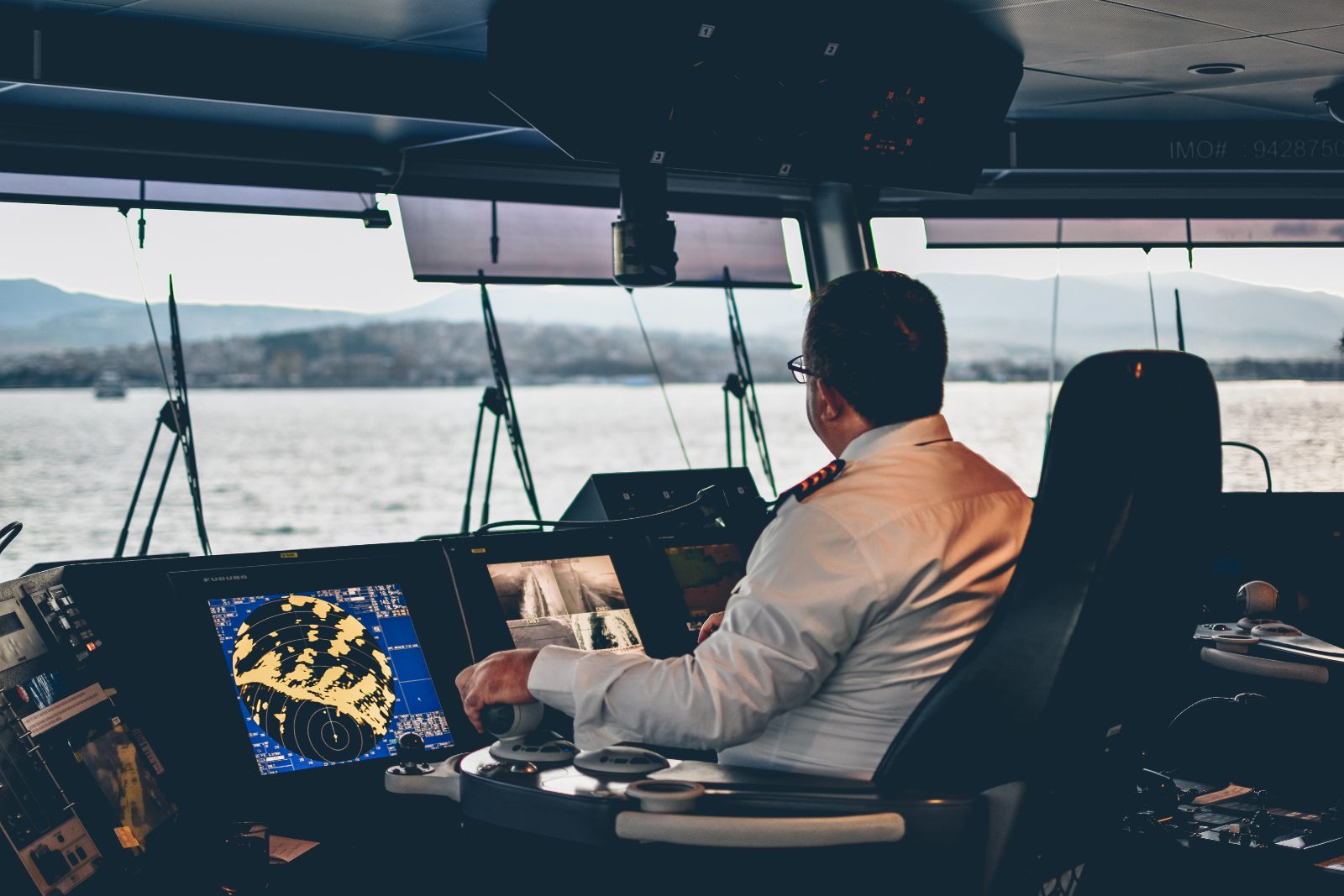
No optimization system replaces the Master's responsibility for the safe navigation of the vessel.
Optimum Voyage provides routing and optimization advice based on the information, vessel characteristics, weather data and operational constraints available to the system.
The Master retains final authority onboard.
That human element is important.
Technology can evaluate a very large number of alternatives and continuously process changing conditions. The Master brings situational awareness, experience and responsibility for the vessel.
The strongest approach combines both.
Optimization inside the boundaries
At Optimum Voyage, safety is not something added to the final route.
It is part of the optimization itself.
Weather limits, navigational constraints and the vessel's operating requirements define the space in which the algorithms are allowed to search.
Inside those boundaries, the objective is to find the best possible commercial and operational voyage.
The principle is simple:
A route is only worth optimizing if it is safe, navigable and actionable in the real world.